

Looking for a rewarding career? You’ve found it.
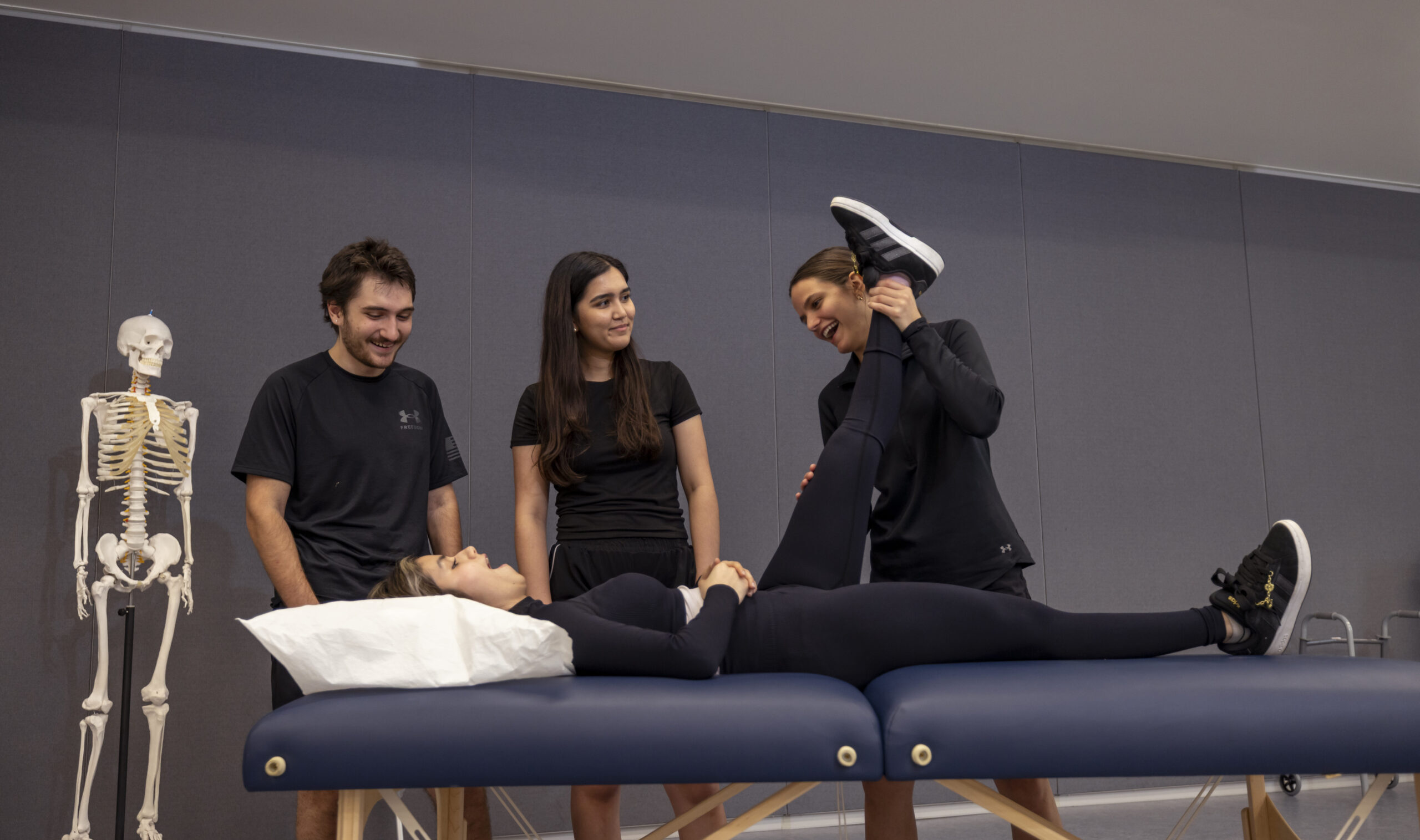
South Piedmont’s Physical Therapist Assistant program blends rigorous coursework, hands-on lab training, and clinical experiences to prepare you for entry-level practice. You’ll gain the skills you need to improve patients’ movement and quality of life while learning to work alongside healthcare professionals in the collaborative, fast-paced environments that define today’s healthcare system.
You’ll benefit from a supportive learning environment and opportunities to collaborate with your fellow students and healthcare professionals across a wide variety clinical settings, and you’ll graduate well prepared to make a difference for others.
The South Piedmont Community College PTA program is currently in development and is planned to launch in fall 2028. As we work toward accreditation, students have the exciting opportunity to be part of the program’s first cohort, helping shape a brand-new learning experience and start their career as a physical therapist assistant from the ground up. Stay tuned for more updates and information sessions.
The Program Options
Mode
In-Person
Prerequisites
27%
Growth in demand for physical therapist assistants expected in our region through 2036. (Lightcast, 2026)
$66,420
National median salary for physical therapist assistants. (Lightcast, 2026)
#4
US News and World Report ranks physical therapist assistant as one of the Best Health Care Support jobs.
PTA Program FAQ
| Curriculum Requirement | Course Title | Semester Credit Hours | Theory | Lab | Clinical | Total |
|---|---|---|---|---|---|---|
| MED 121 | Medical Terminology I | 3.0 | 48 | 48 | ||
| ACA 122 | College Transfer Success | 1.0 | 16 | 16 | ||
| BIO 168 | Anatomy and Physiology I | 4.0 | 48 | 48 | 96 | |
| BIO 169 | Anatomy and Physiology II | 4.0 | 48 | 48 | 96 | |
| ENG 111 | Writing and Inquiry | 3.0 | 48 | 0 | 48 | |
| Total | 15 | 208 | 96 | 304 |
| Curriculum Requirement | Course Title | Semester Credit Hours | Theory | Lab | Clinical | Total |
|---|---|---|---|---|---|---|
| SEMESTER ONE – Fall | ||||||
| ELECTIVE | Humanities/Fine Arts | 3.0 | 48 | 48 | ||
| PTA 110 | Introduction to Physical Therapy | 3.0 | 32 | 48 | 80 | |
| PTA 125 | Gross & Functional Anatomy | 5.0 | 48 | 96 | 144 | |
| PTA 135 | Pathology | 4.0 | 64 | 0 | 64 | |
| Semester One Totals | 15 | 192 | 144 | 336 | ||
| SEMESTER TWO – Spring | ||||||
| PTA 145 | Therapeutic Procedures | 4.0 | 32 | 96 | 128 | |
| PTA 215 | Therapeutic Exercise | 3.0 | 32 | 48 | 80 | |
| PTA 225 | Introduction to Rehabilitation | 4.0 | 48 | 48 | 96 | |
| Semester Two Totals | 13 | 112 | 192 | 304 | ||
| SEMESTER THREE – Summer | ||||||
| ELECTIVE | Social/Behavioral Science | 3.0 | 48 | 48 | ||
| PTA 212 | Health Care/Resources | 2.0 | 32 | 32 | ||
| PTA 222 | Professional Interactions | 2.0 | 32 | 32 | ||
| PTA 165 | PTA Clinical I | 3.0 | 0 | 144 | 144 | |
| Semester Three Totals | 10 | 112 | 144 | 256 | ||
| SEMESTER FOUR – Fall | ||||||
| ELECTIVE | COM 120 OR COM 231 | 3.0 | 48 | 48 | ||
| PTA 235 | Neurological Rehab | 5.0 | 48 | 96 | 144 | |
| PTA 245 | PTA Clinical III | 4.0 | 192 | 192 | ||
| Semester Four Totals | 12 | 96 | 96 | 192 | 384 | |
| SEMESTER FIVE – Spring | ||||||
| PTA 175 | PTA Clinical II | 2.0 | 96 | 96 | ||
| PTA 255 | PTA Clinical IV | 4.0 | 192 | 192 | ||
| PTA 270 | PTA Topics | 1.0 | 16 | 16 | ||
| PTA 280 | PTA Issues I | 1.0 | 16 | 16 | ||
| Semester Five Totals | 8 | 32 | 288 | 320 | ||
| Program Totals | 60 | 464 | 432 | 624 | 1696 |
South Piedmont’s PTA program will:
- Prepare you with the knowledge, technical skills, and licensure readiness required for employment as a physical therapist assistant;
- Strengthen your clinical reasoning, communication, and teamwork abilities to support safe and effective patient care;
- Emphasize evidence-based practice and encourage habits of lifelong learning; and
- Promote professionalism, ethical practice, and respect for the diverse individuals and communities you will serve.
When you graduate, you will be prepared not only for employment but also to contribute to the health and well-being of our community.
Admission to the PTA program is selective and will require you to complete all prerequisite and general education courses with a grade of C or better. BIO 168 and BIO 169 (Anatomy & Physiology I & II) must be completed with a grade of B or higher. You will also need a minimum overall score of 60% on the TEAS exam.
Once you’re admitted, you will take each required core technical course (PTA prefix) in the planned sequence. Each core course must be passed with a minimum grade of 80% (B) to move on to the next course. This ensures you build a strong foundation of knowledge and skills, step by step, as courses are designed to prepare you for the next level of learning.
Additional program expectations include:
- Hands-on lab practice – Participate in on-campus labs and skills assessments to build practical experience.
- Clinical education – Complete supervised clinical experiences at healthcare facilities to apply what you’ve learned in real-world settings.
- Health and safety requirements – Stay current with immunizations, background checks, and drug screenings.
- CPR certification – Maintain current CPR certification for healthcare providers.
- Professional standards – Follow attendance, academic integrity, and professional behavior expectations throughout the program.
Please note: This list is not complete. For all program details—including admission requirements, course information, progression policies, and expectations—students should consult the PTA Program Policy Handbook and the South Piedmont Community College Catalog. Completing the program does not automatically guarantee licensure or employment.
Physical therapist assistants work in a variety of practices. You’ll be prepared to begin your career in any of the following:
- Orthopedics – Restore strength and mobility after musculoskeletal injuries or surgeries.
- Pediatrics – Support children’s growth, development, and mobility.
- Oncology – Aid patients in recovering strength and function after cancer treatment.
- Aquatics – Use water-based therapy to improve movement and balance.
- Sports – Help athletes prevent injuries and recover performance.
- Cardiovascular & Pulmonary – Improve endurance and function for heart and lung conditions.
- Pelvic Health – Address incontinence, postnatal recovery, and pelvic pain.
- Geriatrics – Promote independence and mobility in older adults.
- Neurology – Assist patients recovering from stroke, spinal cord injuries, or neurological conditions.
Physical therapist assistants can pursue careers in a wide variety of settings, gaining hands-on experience and helping patients across the lifespan. Opportunities include:
- Public health – Participate in community programs to promote wellness and prevent injury.
- Outpatient clinics – Treat patients recovering from injury, surgery, or chronic conditions.
- Travel assignments/temporary locations – Gain diverse experience through short-term positions in different regions.
- Nursing homes – Support residents with mobility, strength, and daily function.
- Corporate offices – Promote employee wellness and provide ergonomic solutions.
- Military – Assist service members with rehabilitation and functional recovery.
- Home health – Deliver therapy in patients’ homes to enhance independence.
- Hospitals and acute care facilities – Work with patients recovering from surgery, illness, or trauma.
- Assisted-living facilities – Help residents maintain strength, balance, and quality of life.
- Early intervention programs – Support infants and young children in meeting developmental milestones.
- Sports and fitness facilities – Help athletes prevent injuries, recover, and improve performance.
- Private practice – Provide specialized care in orthopedic, pediatric, or neurological rehab.
Traits of a successful physical therapist assistant include:
- Compassionate – PTAs work closely with patients who may be in pain, recovering from injury, or adjusting to life changes. Showing empathy and genuine care helps build trust and encourages patients to stay engaged in their therapy.
- Team player – Physical therapy is a team effort. PTAs collaborate with physical therapists, nurses, occupational therapists, and other healthcare professionals to provide coordinated care that meets each patient’s unique needs.
- Clear communicator – Clearly explaining exercises, instructions, and progress is essential. PTAs also need to listen carefully to patients’ concerns and report updates accurately to the supervising physical therapist and other healthcare providers on the team.
- Problem solver – Each patient is different, and challenges arise daily. PTAs must think critically, adjust approaches, and find solutions that keep patients progressing safely and effectively.
- Detail-Oriented – Following treatment plans exactly and accurately documenting patient progress ensures safety and helps the physical therapist track outcomes. Small details can make a big difference in recovery.
- Stamina– PTAs often assist patients with exercises, transfers, and mobility tasks. Physical stamina and proper body mechanics are essential to safely perform hands-on therapy without risk to themselves or their patients.
- Professional – Reliability, punctuality, ethical behavior, and maintaining patient confidentiality are fundamental. PTAs represent the profession and must demonstrate integrity in all interactions.
- Adaptable – Therapy sessions, patient needs, and healthcare environments can change quickly. Successful PTAs stay flexible, adjusting to different patients, settings, and treatment plans as needed.
- Patient – Recovery can be slow and sometimes frustrating for both patients and providers. PTAs must remain encouraging, supportive, and calm, helping patients stay motivated and focused on their goals.
- Lifelong Learner – Healthcare is always evolving. PTAs need to stay current with new research, techniques, and best practices, continually building their skills to provide the highest quality care.
Graduation from a physical therapist assistant education program accredited by the Commission on Accreditation in Physical Therapy Education, 3030 Potomac Ave., Suite 100, Alexandria, VA 22305-3085; phone; 703-706-3245; accreditation@apta.org is necessary for eligibility to sit for the licensure examination, which is required in all states. Candidacy is considered to be an accredited status, as such the credits and degree earned from a program with Candidacy status are considered, by CAPTE, to be from an accredited program. Therefore, students in the charter (first) class should be eligible to take the licensure exam even if CAPTE withholds accreditation at the end of the candidacy period. That said, it is up to each state licensing agency, not CAPTE, to determine who is eligible for licensure. Information on licensing requirements should be directed to the Federation of State Boards of Physical Therapy (FSBPT; www.fsbpt.org) or specific state boards (a list of state boards and contact information is available on FSBPT’s website).
South Piedmont Community College is seeking accreditation of a new physical therapist assistant education program from CAPTE. The program is planning to submit an Application for Candidacy, which is the formal application required in the pre-accreditation stage, on November 1, 2027. Submission of this document does not assure that the program will be granted Candidate for Accreditation status. Achievement of Candidate for Accreditation status is required prior to implementation of the professional/technical phase of the program; therefore, no students may be enrolled in professional/technical courses until Candidate for Accreditation status has been achieved. Further, though achievement of Candidate for Accreditation status signifies satisfactory progress toward accreditation, it does not assure that the program will be granted accreditation.
PTA Student Outcomes
Financial Fact Sheet
- Complaints about the PTA Program can be addressed:
- PTA Program DirectorJoanna Helbig
- The Commission on Accreditation in Physical Therapy Education (CAPTE)
3030 Potomac Avenue, Suite 100
Alexandria, VA 22305-3085
703-706-3245
Complaints | Commission on Accreditation in Physical Therapy Education
*Retaliation is a violation of South Piedmont Community College policy. Anyone who believes they are a victim of retaliation should contact the Director of Student Wellness and
Advocacy or the Vice President of Academic Affairs/CAO
Explore Similar Programs
Or go back