

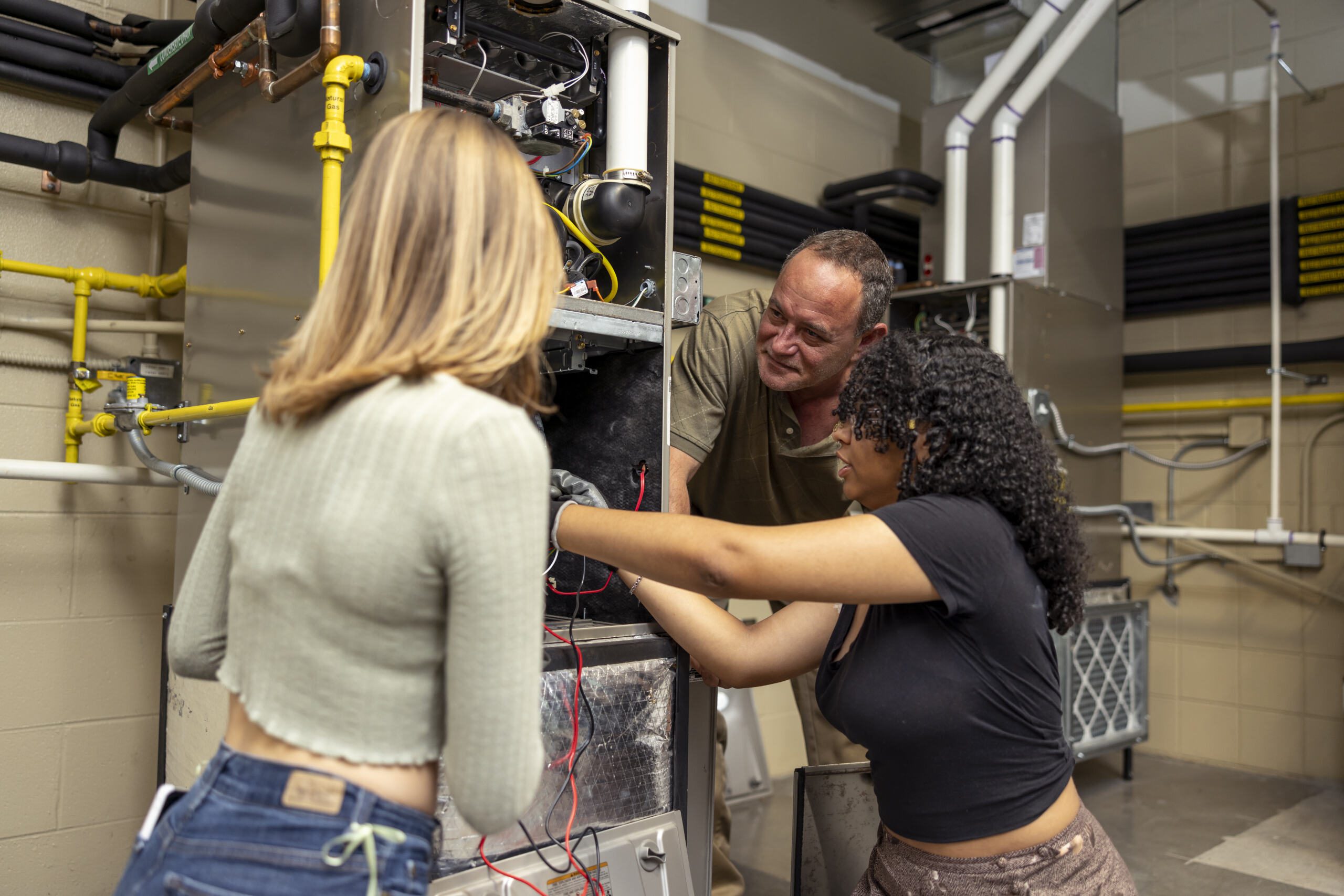
Become an electrician? That’s a bright idea.
Do you want a career that’s hands-on, high-energy, and in high demand? Becoming an electrician might be your perfect spark! From wiring up new homes to keeping businesses running, electricians are pros who keep the world powered.
This is a great career choice if you enjoy working with your hands, solving problems, and making money.
The Program Options
Mode
Online/in-person
Prerequisites
None
Mode
Online/in-person
Prerequisites
None
Mode
Online/in-person
Prerequisites
None
Mode
Online/in-person
Prerequisites
None
Mode
Online/in-person
Prerequisites
None
Mode
Online/in-person
Prerequisites
None
Mode
Online/in-person
Prerequisites
None
19:1
Average student-to-teacher ratio at South Piedmont
2
Specializations available: Electrical and hydro-mechanical
NCCER
You’ll prepare for certifications from the National Center for Construction Education and Research.
Electrical Systems FAQ
Electrical Systems Technology is the study of how electrical systems are installed, maintained, repaired, and upgraded in residential, commercial, and industrial settings. Students learn electrical wiring, electrical theory, motor controls, programmable logic controllers (PLCs), safety practices, and the National Electrical Code (NEC).
One of the most common paths to becoming an electrician is to complete electrical training through a community college and then gain hands-on work experience through employment or an apprenticeship. South Piedmont’s Electrical Systems Technology program prepares students with the technical knowledge and practical skills needed to enter the electrical field.
The timeline depends on the credential you choose and your career goals. At South Piedmont, students can earn a certificate in as little as three semesters, complete a diploma program, or pursue a two-year Associate in Applied Science degree in Electrical Systems Technology. You can start right away as a helper and getting a certificate or diploma will accelerate your career to become an electrician sometimes within 2 to 4 years
Students learn electrical wiring, AC/DC electrical theory, industrial motor controls, programmable logic controllers (PLCs), electrical troubleshooting, electrical safety, and applications of the National Electrical Code. Coursework combines classroom instruction with hands-on training.
Graduates may pursue careers such as electrician, electrical technician, electrical apprentice, service electrician, linesman, control panel builders, controls technician, maintenance electrician, electrical installer, or electrical systems specialist. The program also provides a strong foundation for apprenticeship opportunities.
Electrical careers are often attractive because skilled electricians are needed in residential construction, commercial buildings, manufacturing facilities, and industrial operations. Electrical skills are transferable across many industries, creating a wide range of employment opportunities.
Electricians typically install, maintain, and repair electrical systems in homes, businesses, and industrial facilities. Electrical technicians may focus more on troubleshooting, testing, automation systems, controls, and specialized electrical equipment. South Piedmont’s program provides foundational skills that can support either career path.
Yes. South Piedmont’s Electrical Systems Technology program combines classroom learning with hands-on training designed to prepare students for real-world electrical work. Students gain practical experience working with electrical systems, tools, equipment, and industry-standard practices.
Yes. South Piedmont offers apprenticeship opportunities in electrical systems and other skilled trades. Apprenticeships allow students to combine classroom instruction with paid, on-the-job experience.
The electrical pathway focuses on electrical systems used in residential, commercial, and industrial settings. The hydro-mechanical Pathway includes electrical training while also introducing students to mechanical and hydraulic systems, providing broader preparation for industrial and manufacturing environments.
No. South Piedmont’s Electrical Systems Technology program has no prerequisites, making it a great option for recent high school graduates, career changers, and adults looking to enter the skilled trades.
Yes. South Piedmont offers an Enhanced Career and College Promise (CCP) pathway that allows eligible high school students to begin studying Electrical Systems Technology while earning college credit.
Make the Most of Your Time at South Piedmont
Deepen your education by participating in our Enhanced Learning Opportunities.